
Agentic AI compliance vs traditional automation marks a fundamental shift from rigid, rules-based workflows to autonomous systems capable of adaptive reasoning and proactive risk detection. Unlike traditional automation that follows static scripts, agentic AI scales by continuously monitoring controls and automating complex evidence collection for audits. This evolution enables modern regulators to achieve higher productivity and radical transparency through self-operating systems that adjust to changing legal landscapes.
Regulators today face a relentless surge in data complexity, rendering traditional "if-then" automation increasingly obsolete. Static rulesets frequently crumble when confronted with nuanced, multi-layered compliance requirements, leading to an overwhelming number of false positives and overlooked risks. The industry is reaching a critical inflection point where simple scripting no longer suffices for sophisticated oversight. Understanding the shift from rigid automation to autonomous, agentic AI is no longer optional for maintaining institutional integrity. This guide explores the fundamental evolution from rule-based systems to reasoning-driven compliance frameworks. We will examine the operational limitations of legacy auditing tools, compare them directly against the capabilities of agentic AI, and outline a strategic roadmap for integrating these intelligent agents into your regulatory infrastructure while preserving essential human oversight.
Understanding the Evolution from Rules to Reasons

The landscape of regulatory oversight is undergoing a fundamental shift from rigid scripts to reasoning engines. To understand the transition, we must first distinguish between deterministic systems and probabilistic agents. Traditional automation operates on fixed logic. These systems are programmed to execute specific, repetitive tasks whenever a predefined trigger occurs. In a regulatory context, this might involve a script that flags a transaction only if it exceeds a specific numerical threshold. It is highly predictable but entirely inflexible.
When evaluating agentic AI compliance vs traditional automation, the primary differentiator is the shift from paths to goals. While traditional automation follows deterministic if-then sequences, agentic AI is probabilistic and goal-oriented. It does not just follow a list of instructions; it understands the intended outcome, such as verifying a beneficial owner's residency status, and determines the most efficient sequence of steps to achieve it. It can plan its own path, select necessary tools, and adjust its behavior based on the data it encounters.
Consider the analogy of a train versus a self-driving car. Traditional automation is the train. It is incredibly efficient as long as it stays on its tracks, but if those tracks are blocked or the destination shifts slightly, the system fails. Agentic AI is the self-driving car. It is given a destination, and it uses sensors, memory, and reasoning to navigate traffic, road closures, and changing conditions to arrive safely. This capability allows regulated entities to manage their audit and compliance processes with far greater resilience. By moving beyond hard-coded rules, organizations can streamline regulatory requirements that would otherwise require constant manual intervention as global standards evolve.
The Limitations of Traditional Automation in Modern Auditing
Legacy systems and Robotic Process Automation (RPA) are increasingly struggling under the weight of modern regulatory volume. The core issue is brittleness. Because traditional automation relies on hard-coded selectors and rigid scripts, even a minor change in a government portal's interface or a slight alteration in a reporting format can cause the entire process to fail. These systems cannot reason that a button has moved slightly or that a report header has been renamed; they simply stop functioning.
In fast-paced sectors, where regulatory guidelines are frequently refined, this rigidity becomes a significant liability. Every time a new clause is introduced, developers must manually rewrite code to keep the system compliant. This creates a cycle of high maintenance costs and technical debt. Compliance professionals often spend up to 50 percent of their week on manual interventions just to fix what automation broke.
When comparing agentic AI compliance vs traditional automation, the financial burden of the latter is clear. Traditional systems require constant human supervision to streamline regulatory requirements across disparate jurisdictions. Instead of freeing up staff for high-level risk assessment, legacy RPA forces teams to become bot-sitters, manually validating data that the system failed to parse. This prevents firms from effectively managing their audit and compliance processes without ballooning their operational overhead.
How Agentic AI Transforms Regulatory Oversight
To overcome the limitations of brittle scripts, agentic AI introduces three core capabilities: reasoning, tool use, and memory. Reasoning allows the agent to break down a complex compliance objective into a sequence of logical sub-tasks. Tool use enables the agent to interact with external environments, such as querying an ERP system, calling an API, or accessing a cloud storage bucket to retrieve specific data points. Memory ensures the agent retains context across long-running audit cycles, allowing it to recognize when an entity’s risk profile has shifted over time compared to previous filings.
When comparing agentic AI compliance vs traditional automation, the workflow for a new regulatory requirement demonstrates a stark contrast. Instead of a developer spending weeks mapping out a new data ingestion pipeline, an AI agent can read a fresh regulatory circular and autonomously determine which pieces of evidence are required for verification. It might identify that a specific KYC (Know Your Customer) update is needed and proactively fetch the relevant logs from a secure database without a human having to write a new script. This allows both regulators and entities to manage their audit and compliance processes with a level of agility that manual programming cannot match.
For regulators, the most critical shift is the move toward explainability. Unlike black box models that provide an output without context, agentic systems produce a reasoning trace. This is a granular log explaining why a specific decision was made, which tools were accessed, and which sections of the law were applied. This transparency is essential for maintaining the integrity of the oversight process. It ensures that when a system flags a potential breach, the human supervisor can see the exact logic behind the alert. This capability allows firms to streamline regulatory requirements while providing the dynamic documentation necessary for a modern audit trail.
Critical Comparison: Agentic AI Compliance vs Traditional Automation
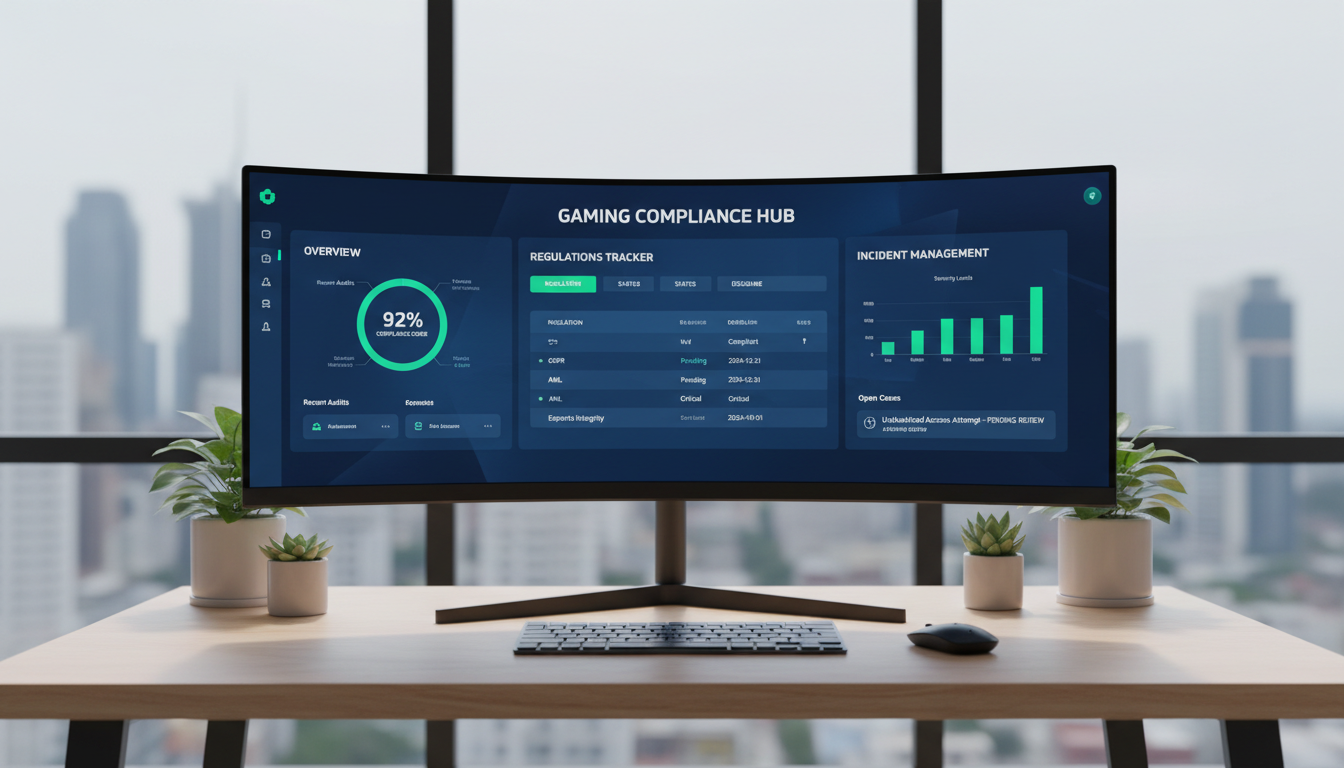
To effectively transition into modern oversight, organizations must evaluate the technical architecture of their systems. A direct comparison of agentic AI compliance vs traditional automation reveals why legacy tools struggle with the high-velocity data environments found in regulated markets. While traditional tools rely on fixed paths, agentic systems prioritize the objective.
Attribute | Traditional Automation (RPA/Legacy) | Agentic AI Compliance |
|---|---|---|
Adaptability | Static: Breaks when report formats or UI elements change slightly. | Evolving: Adjusts to changes in data structures or interfaces using reasoning. |
Logic | Rigid Rules: Follows deterministic, hard-coded "if-then" sequences. | Contextual Reasoning: Uses probabilistic logic to interpret intent and goals. |
Scalability | Manual Updates: Requires developer intervention for every regulatory update. | Autonomous Learning: Scales by applying known principles to new, similar tasks. |
Audit Trails | Pre-defined Logs: Records that a specific step was executed. | Reasoning Traces: Provides a granular "why" for every decision and tool used. |
This distinction is vital for the transition to Continuous Controls Monitoring (CCM), a standard increasingly expected by 2026. Traditional systems are too brittle for CCM; they produce excessive false positives when data patterns shift, forcing compliance teams to spend 30 to 50 percent of their week on manual corrections. Conversely, agentic AI provides the resilience needed to manage their audit and compliance processes in real time. Because the agent understands the underlying regulatory requirement, it can autonomously navigate minor changes in evidence formatting without failing. This allows firms to streamline regulatory requirements by automating approximately 20 to 40 percent of repetitive labor while maintaining a transparent, step-by-step reasoning trace that satisfies the most demanding auditors.
Real-World Use Cases for Regulators and Regulated Entities

The transition from theoretical architecture to operational reality highlights the tangible advantages of agentic systems. For regulators, the application of this technology marks a shift from reactive spot checks to proactive industry oversight. Instead of reviewing individual filings in isolation, agentic systems perform automated cross-entity risk assessments. An agent can analyze data across hundreds of firms simultaneously to identify emerging patterns of non-compliance that might be invisible at a micro level. If multiple entities in the financial sector show similar anomalies in liquidity reporting, the agent flags this as a systemic risk rather than an isolated incident, allowing the regulator to intervene before a crisis occurs.
Regulated entities find immediate relief in high-volume administrative tasks. A primary use case is the automated processing of third-party questionnaires. Assessing a vendor's compliance often involves manually reviewing hundreds of responses; an AI agent can ingest these documents, cross-reference them with internal risk policies, and automatically highlight discrepancies. Additionally, real-time evidence collection for audits removes the frantic rush typically associated with regulatory examinations. Agents continuously monitor internal databases and cloud environments to gather necessary logs and certifications. This proactive approach allows firms to manage their audit and compliance processes with 20 to 40 percent less repetitive labor than traditional methods.
Platforms like Regiply serve as the critical infrastructure where these capabilities converge. By facilitating the exchange of structured, agent-verified data, Regiply bridges the communication gap between the supervisor and the supervised. This creates a shared environment where evidence is transparent and reasoning traces are accessible to both parties. In the debate of agentic AI compliance vs traditional automation, the value lies in this collaborative efficiency. It enables both sides to streamline regulatory requirements through a unified technological language, ensuring that compliance is a continuous state rather than an annual event.
The Human in the Loop: What Agentic AI Should Not Do
Effective implementation of these technologies requires a clear boundary between labor and authority. While comparing agentic AI compliance vs traditional automation often highlights the former's superior reasoning, this capability must be governed by AI Orchestration. In this model, humans define the overarching goals and safety guardrails, while the agents execute the complex, repetitive work within those defined parameters.
From a CISO's perspective, governance is the primary concern. There are specific domains where an agent should never operate autonomously: - Risk Acceptance: Only human officers should have the final sign-off on accepting residual risks or approving deviations from standard policy. - Stakeholder Communication: Material interactions with regulators or shareholders require human empathy and nuanced judgment. - Regulatory Interpretation: Agents can monitor changes, but the final legal determination of how a new UAE law applies to specific business operations remains a human responsibility.
By maintaining a human-in-the-loop approach, organizations can manage their audit and compliance processes without ceding accountability. This structure allows the system to streamline regulatory requirements by handling the heavy data retrieval and cross-referencing, while leaving high-level strategic decisions to the experts. This balance ensures that while the speed of compliance increases, the integrity of the oversight remains absolute.
Transitioning from static automation to adaptive Agentic AI is no longer optional for regulators aiming to manage modern complexities effectively. This shift ensures proactive compliance, yet the integration process demands a balanced approach to technology and oversight. If you want expert help navigating these sophisticated systems, our consultants are here to guide your strategy. Learn more about us to discover how we help organizations build resilient, future-proof regulatory frameworks that prioritize both innovation and safety.